Common description
Karat is one of six districts in Arusha, Tanzania. It is bordered by Ngorongoro in the north, Shinyanga in the west, Monduli in the east, and Manyara in the south and southeast.
Ngorongoro is a huge crater in Tanzania on the edge of the Serengeti Savannah that emerged as a caldera as a result of the collapse of a large volcano about 2.5 million years ago. The bottom of the crater is located at an altitude of 2380 m above sea level. Its edges are approximately 600 m above sea level and rise 3000 m above sea level. The diameter of the Ngorongoro Crater is 17 to 21 km and its total area is approximately 26,400 hectares. At the bottom of the crater is Lake Magadi, famous for its flamingo population. Ngorongoro Crater is unique in that for many years it has formed its own habitat for many species of animals that are unable to escape outside.
Due to the height difference and the dynamics of the air masses, the climate in Ngorongoro varies greatly depending on the place. Higher terrain is usually wet and foggy. The plain is subject to considerable fluctuations in temperature. Most precipitation occurs in November and April and also varies greatly depending on location. The edges of the crater are covered with shrubs and are moist savannah with tall grass and residual evergreen mountain forests. At the bottom of the crater the grass is shorter, there are drinking springs and acacia forests.
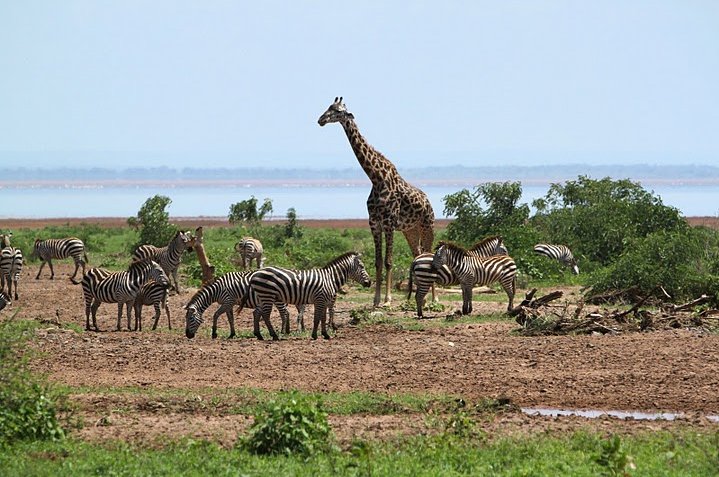
The crater is home to about 25,000 animals, with the highest density of predators in Africa. Particularly common in Ngorongoro are zebras, buffaloes and various antelope species such as wildebeests, canoes and gazelles. They are hunted by lions and leopards living in the crater. In addition to them, Ngorongoro also inhabits black rhinos, elephants and, unusual for these latitudes, hippos. Large migratory flows of animals from the Serengeti often pass through the Ngorongoro Crater.
Ngorongoro is a huge crater in Tanzania on the edge of the Serengeti Savannah that emerged as a caldera as a result of the collapse of a large volcano about 2.5 million years ago. The bottom of the crater is located at an altitude of 2380 m above sea level. Its edges are approximately 600 m above sea level and rise 3000 m above sea level. The diameter of the Ngorongoro Crater is 17 to 21 km and its total area is approximately 26,400 hectares. At the bottom of the crater is Lake Magadi, famous for its flamingo population. Ngorongoro Crater is unique in that for many years it has formed its own habitat for many species of animals that are unable to escape outside.
Due to the height difference and the dynamics of the air masses, the climate in Ngorongoro varies greatly depending on the place. Higher terrain is usually wet and foggy. The plain is subject to considerable fluctuations in temperature. Most precipitation occurs in November and April and also varies greatly depending on location. The edges of the crater are covered with shrubs and are moist savannah with tall grass and residual evergreen mountain forests. At the bottom of the crater the grass is shorter, there are drinking springs and acacia forests.
The crater is home to about 25,000 animals, with the highest density of predators in Africa. Particularly common in Ngorongoro are zebras, buffaloes and various antelope species such as wildebeests, canoes and gazelles. They are hunted by lions and leopards living in the crater. In addition to them, Ngorongoro also inhabits black rhinos, elephants and, unusual for these latitudes, hippos. Large migratory flows of animals from the Serengeti often pass through the Ngorongoro Crater.
Karatu on map
+ 19°C